


Environment
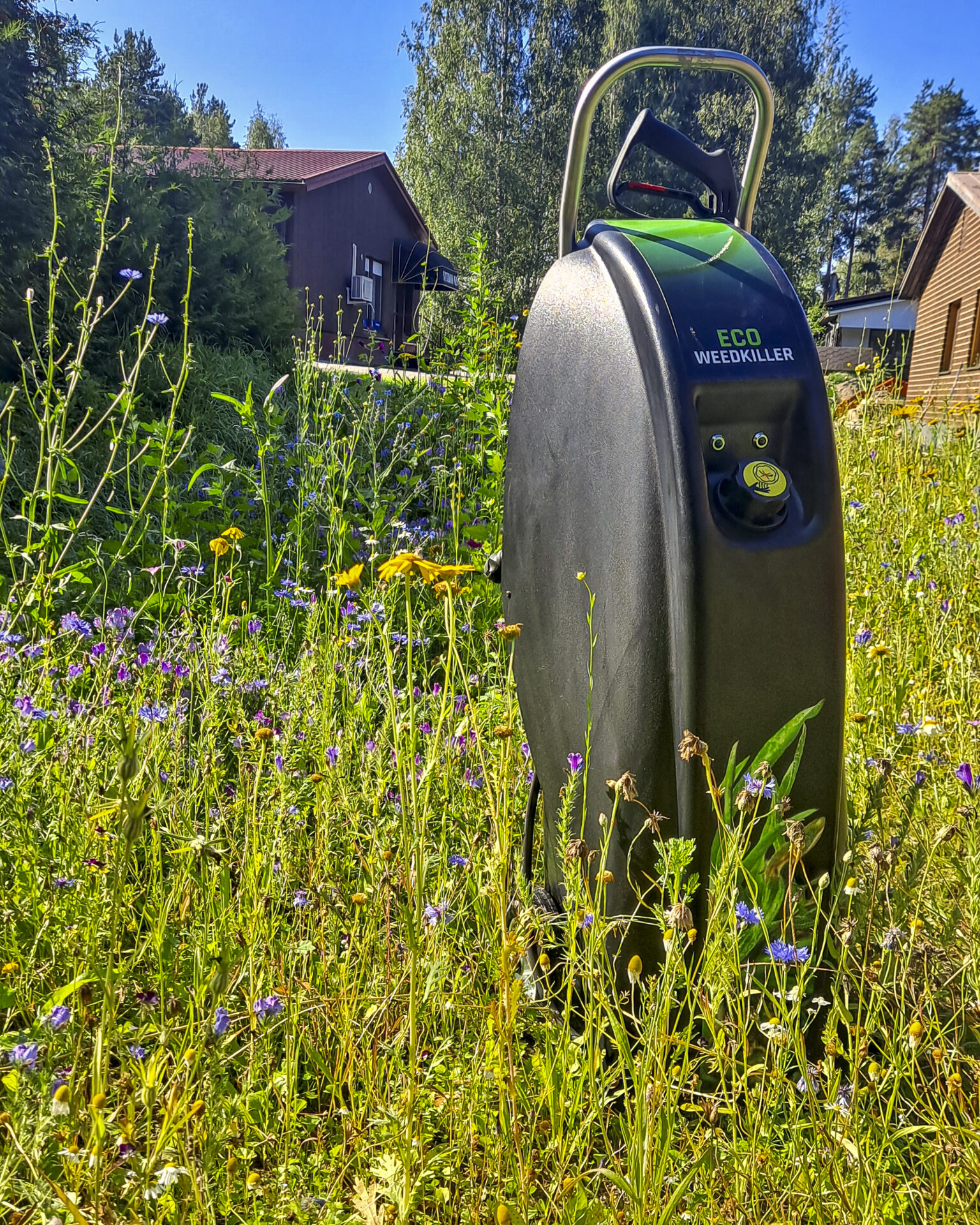
No chemicals, only water. Pollinators, soil, and waterways will thank you!
Hot water is an effective, ecological, and cost-efficient way to eliminate plants along with their roots, unlike, for example, digging, which is expensive and increases the risk of spreading harmful plants. When using hot water for weed control, we ensure that the life cycle impact (LCA) remains significantly lower compared to the use of herbicides. The impacts mainly arise from diesel fuel use, and even these effects can be reduced through high equipment efficiency and fuel selection.
Active substance 100°C water
The effect of hot water in weed control is based on a sudden surge of thermal energy, which damages plant tissue. Water is a great medium in transferring heat due to its great heat capacity of 4,18 kj/K. In comparison, the heat capacity for steam is 2,08 and for air is 1,01.
Why can even temperatures of up to 1000°C fail to damage roots and seeds?
Because soil is an excellent insulator that protects root systems and buried seeds from heat. A layer of just a couple of centimeters of soil is sufficient.
Why can only 100°C water destroy roots?
The function of plant roots is to absorb water and nutrients from the soil. Due to the soil’s insulating properties, evolution has not needed to develop heat protection for roots. Evolution has even created better conditions for the effective use of the hot water method. Roots loosen the surrounding soil, creating “root channels” around them. These channels facilitate the absorption of rainwater deep into the soil. Hot water travels along these same channels deep into the ground, carrying the heat with it. The protective layer of roots is typically only one cell membrane thick; therefore, 100°C water destroys the root system and the plant dies.
The heat of the water also stimulates seeds in the seed bank to germinate, and destroying small seedlings requires only a small amount of water a couple of weeks after the first treatment.