

Eco Weedkiller PRO plays a key role in tackling invasive plant species
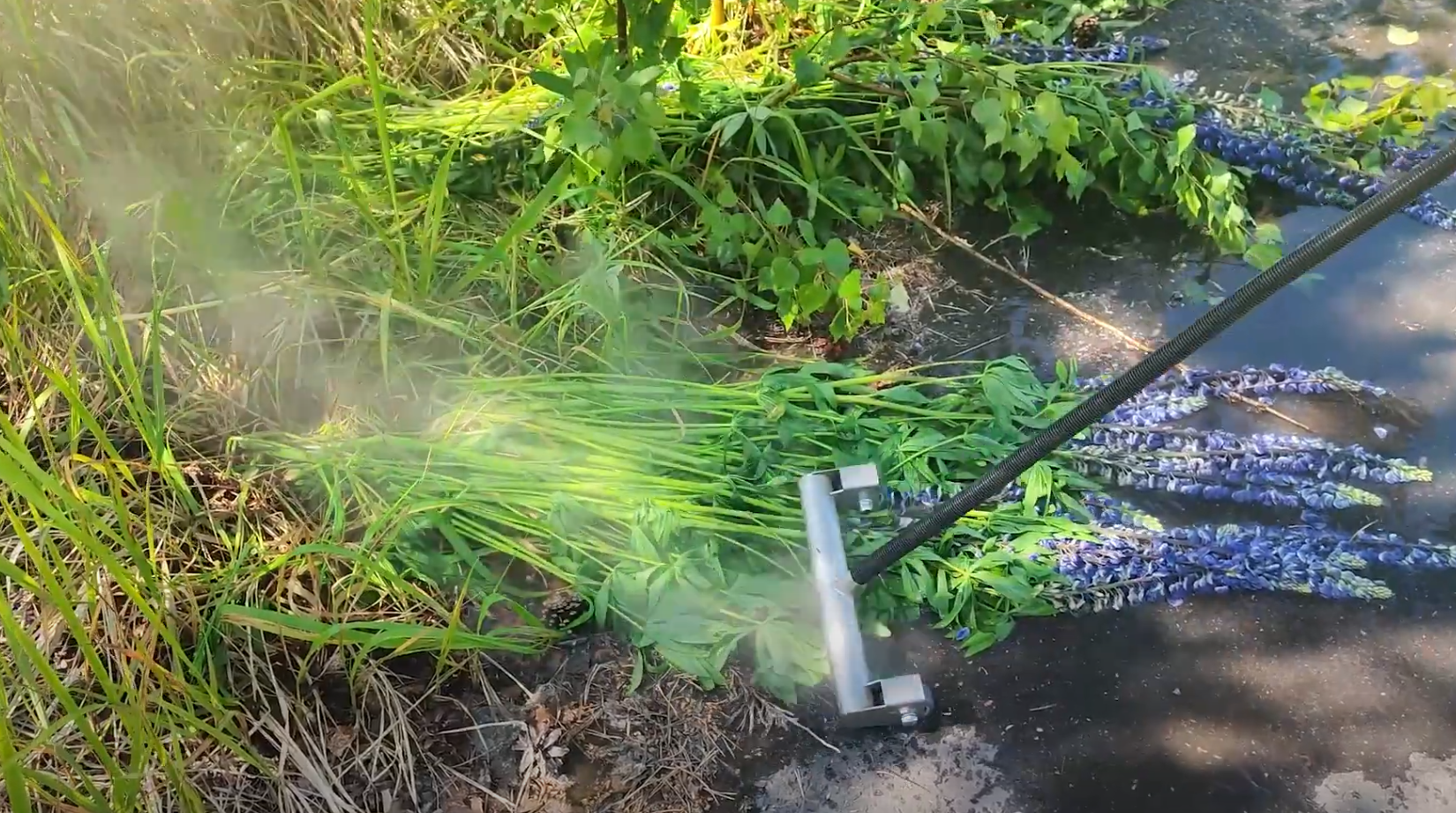
Yesterday marked a new phase in the fight against invasive lupins at the Riekkola small boat harbor in Haparanda, Sweden. Under the coordination of the County Administrative Board of Norrbotten, the weed control operation is part of the BB Alien project, which aims to find effective and environmentally friendly ways to manage invasive species. The method being used is Eco Weedkiller PRO, a hot water device that treats lupins with 100 °C water – completely free of chemicals.
The practical work is carried out by Meri-Lapin Kiinteistöpalvelut Oy from Kemi, with Jani Kallinen among those on the job.
Read the SVT news article (in Swedish) >>>
Developing a cost-efficient hot water method
Eco Weedkiller has developed this method specifically for lupin control. The goal is to create a cost-effective and repeatable model for large-scale invasive species management. Systematic development started in 2024, and the first season’s results have been very promising.
A single lupin can produce up to 2,500 seeds per year, and the seeds can remain dormant in the soil for years. Therefore, repeated treatments are needed. Hot water kills the plant including its roots, gradually weakening the seed bank.
A sustainable solution through collaboration
This is a great example of how authorities, research institutions, and private companies can work together to protect biodiversity. The method is entirely chemical-free and does not harm the surrounding environment or native plant species.
Eco Weedkiller’s technology has already gained interest across Finland and Europe. The aim is to make this pilot a replicable model for broader use in invasive species management.
📞 More information:
Kimmo Kärki
+358 50 490 0085
[email protected]
BB Alien – A Nordic collaboration project against invasive species
BB Alien is a three-year cross-border cooperation project between Sweden and Finland. Partners include the County Administrative Board of Norrbotten, the Swedish Hunters’ Association, the Finnish Natural Resources Institute LUKE, and Metsähallitus.
The project addresses not only lupins but also raises awareness and develops control strategies for other invasive species such as Himalayan balsam, curly pondweed, rugosa rose, and mink. It is funded by the Interreg Aurora program.