
Invasive Species – A Growing Challenge for Municipalities
Invasive species are a growing challenge for many municipalities. They weaken biodiversity, complicate the maintenance of green areas and streets, and increase costs. The longer control measures are delayed, the faster the problem – and its costs – escalate.
Why Control Invasive Plants with Hot Water?
When harmful invasive species such as giant hogweed, Japanese knotweed, and lupine are allowed to spread, their eradication quickly becomes difficult and expensive. Deep-rooted plant stands may even require soil replacement, which can cost thousands of euros per site. Waste disposal fees alone are approximately €120 per ton, and there is always a risk that invasive species will spread further with transported soil masses.
Manual removal is also not a practical solution. While it may temporarily slow the spread, the method is extremely labor-intensive and rarely permanent. Plants regenerate quickly because roots remain in the soil, and even a small root fragment can grow into a new plant.
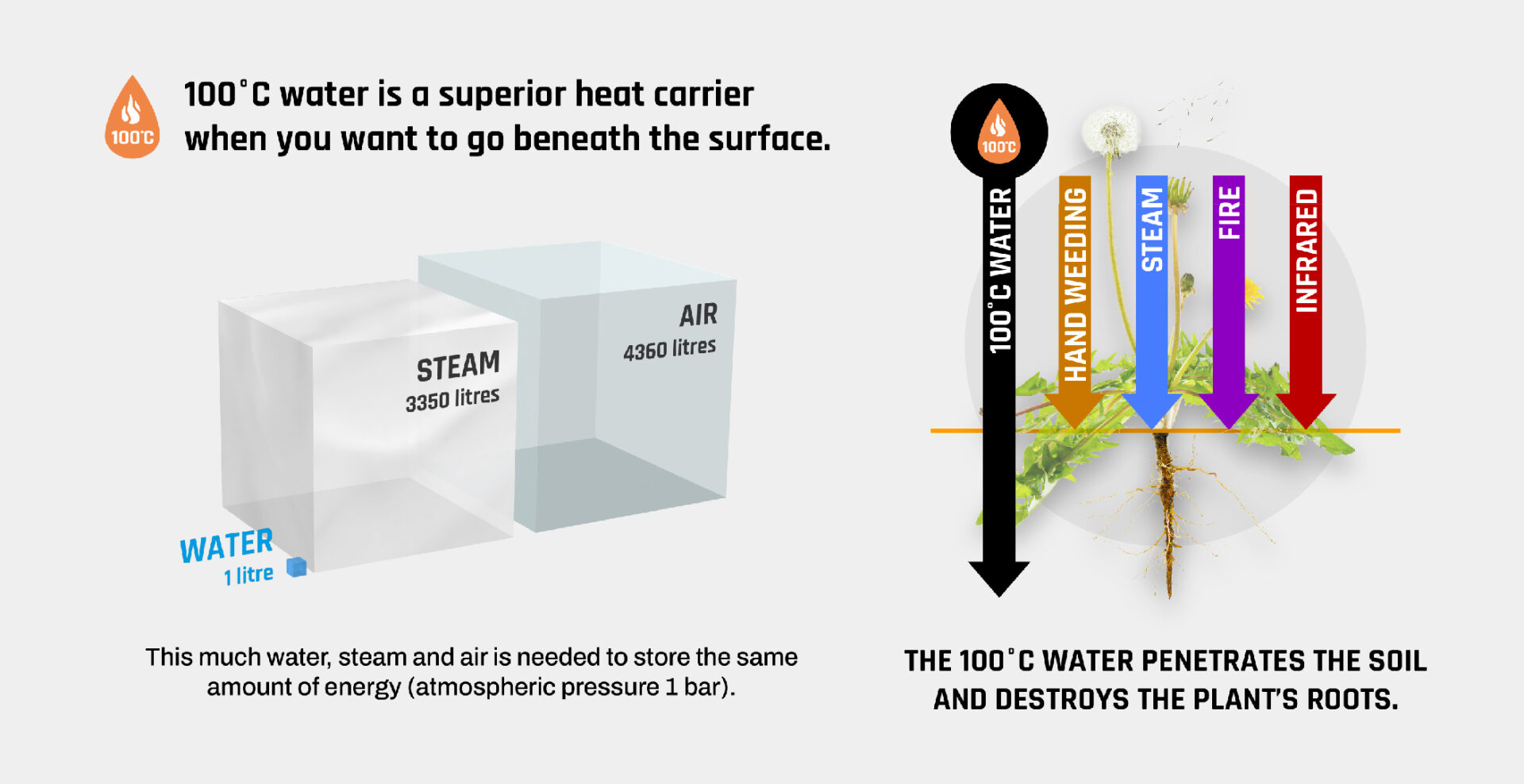
In contrast, early and regular hot water treatment stops the spread at an early stage and keeps control costs manageable. With sufficient dosing, a large amount of thermal energy is transferred into the ground, raising the temperature of the soil surrounding the roots to easily 60–80°C, and momentarily even close to 100°C. Since soil is an excellent insulator, it retains heat at a sufficient level for tens of minutes in the critical parts of the plant’s root system. The spike nozzle further enhances effectiveness, and it is clearly visible how the water “finds” the easiest path through the soil – near the roots, where the soil is looser.
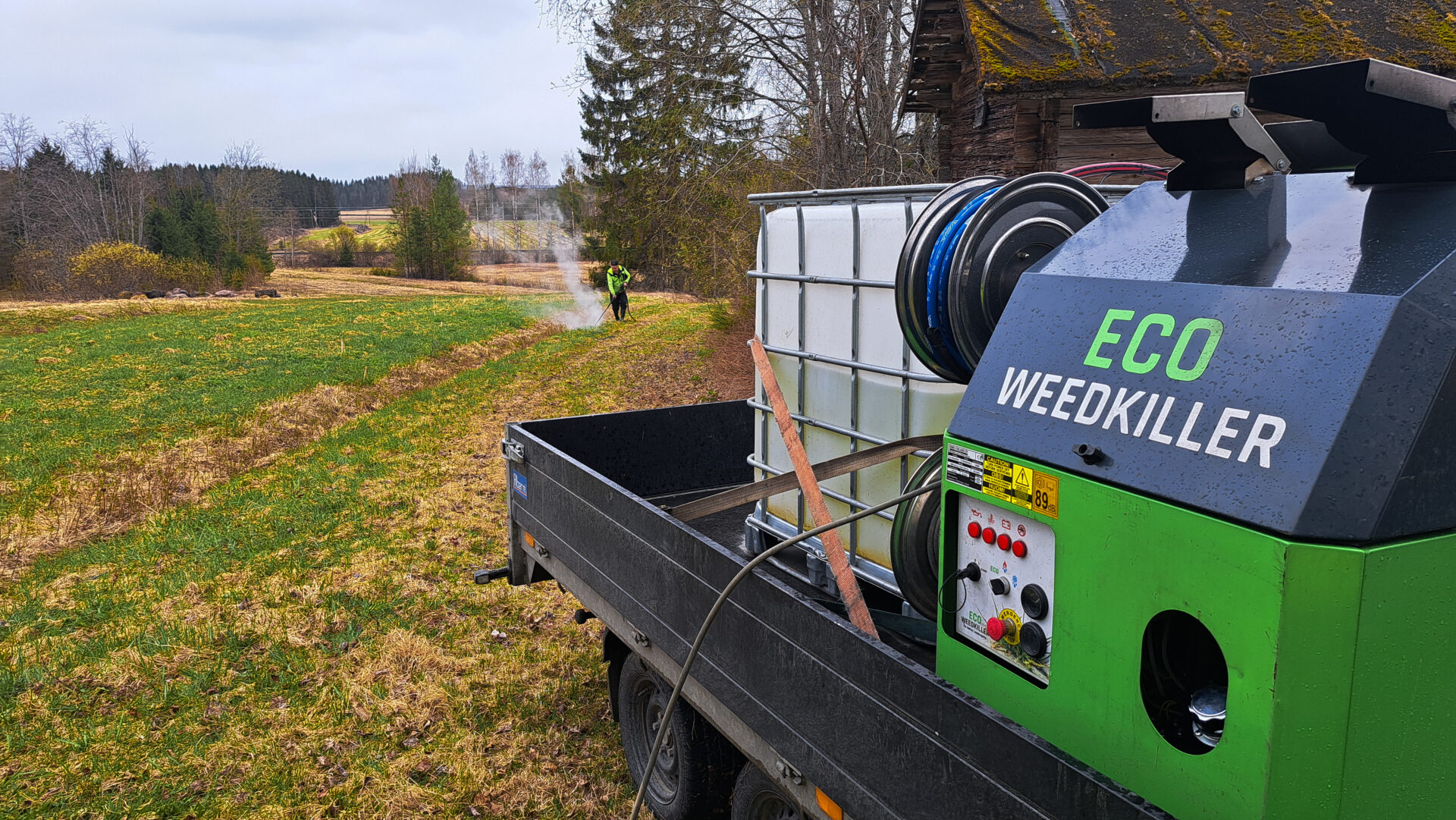
Hot water treatment is always carried out directly at the infestation site, preventing the spread of harmful invasive species. When control is included as part of annual maintenance work, results are achieved and costs remain reasonable.
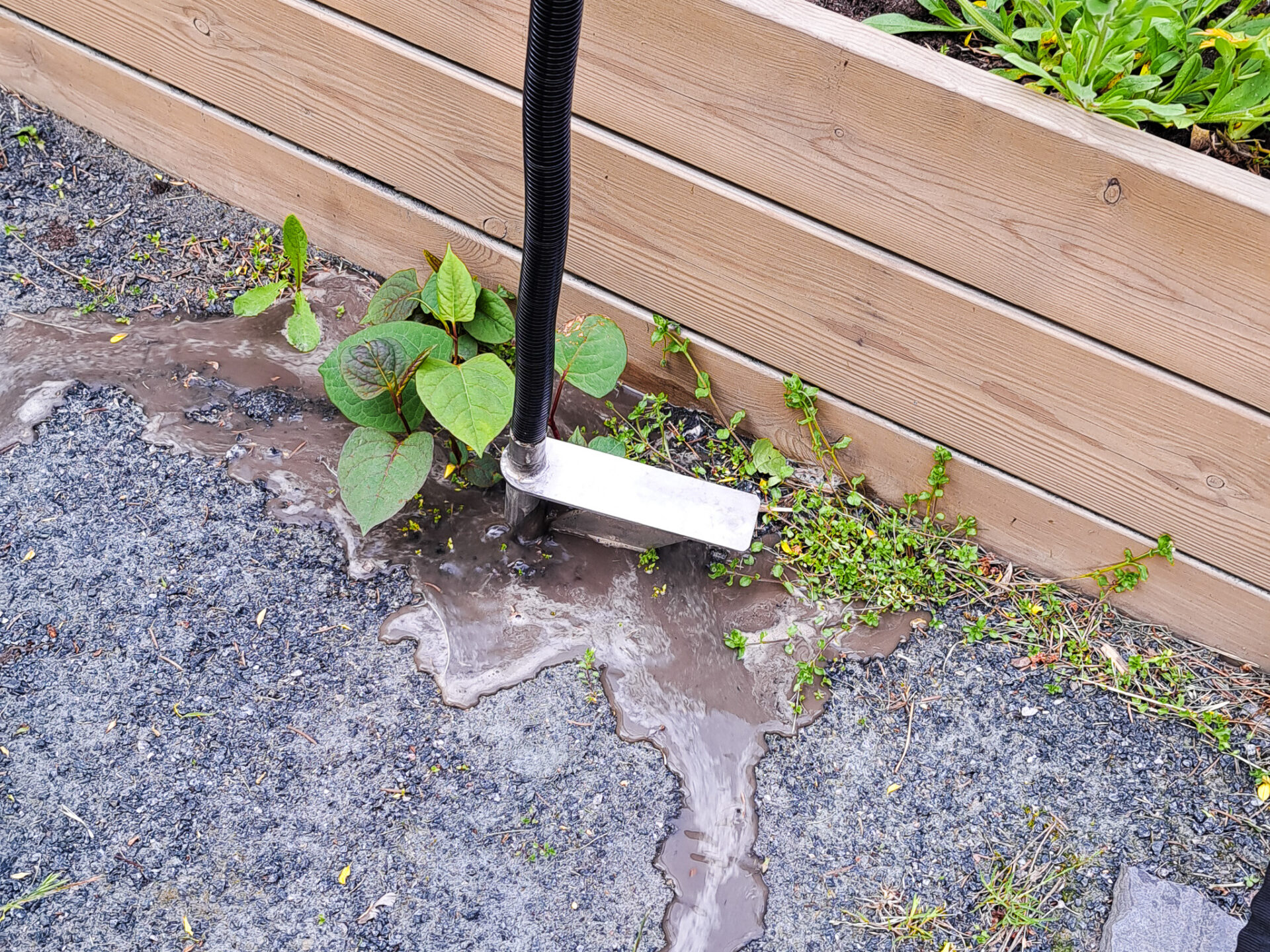 The spike nozzle of the EWK PRO series enables effective destruction of roots even for more resilient species.
The Most Costly and Common Invasive Species in Municipalities
In Finland, municipalities face the greatest challenges especially from:
-
Giant hogweed (Heracleum mantegazzianum): Extremely harmful and even dangerous to health; spreads rapidly and is difficult to remove manually.
-
Japanese knotweed (Fallopia japonica): Penetrates structures and can damage asphalt and foundations.
-
Lupine (Lupinus polyphyllus): Visually attractive but displaces native meadow plants and impoverishes pollinator habitats.
-
Himalayan balsam (Impatiens glandulifera): Spreads rapidly in moist areas, suppresses other vegetation, and is easily transported by waterways.
-
Rugosa rose (Rosa rugosa): Forms dense thickets along shores and roadsides, displaces native species, and complicates area maintenance.
Learn more about the invasive species control project carried out in Haparanda >>>
Nature and the Budget Will Thank You
Controlling invasive species is not only an environmental act but also economically sound maintenance. Early intervention prevents costly soil replacement, infrastructure damage, and extensive restoration work.
Well-maintained green areas and roadsides also improve a municipality’s attractiveness, safety, and comfort. Invasive species management supports municipal climate and biodiversity goals, which are increasingly emphasized in national and EU funding programs.
Benefits of the Hot Water Method in Invasive Species Control
Eco Weedkiller’s hot water method destroys plants including their roots using hot water, completely without chemicals and without harming surrounding vegetation or soil.
The method is particularly attractive to municipalities because it is:
-
Cost-effective: No need for soil replacement or major landscaping work.
-
Safe: No chemical residues or risks to workers or residents.
-
Controlled: Plants are destroyed on-site, so seeds or roots are not transported elsewhere.
-
Environmentally friendly: Supports municipal sustainability goals.
-
Effective: Hot water transfers a large amount of thermal energy directly to the roots, rapidly destroying plant tissue.
-
Ergonomic: Treatment is efficient and far less physically demanding than manual removal.
The Effect of Boiling Water on Plant Roots
Boiling water, at approximately 100°C, destroys plant roots rapidly through several cellular-level mechanisms. Heat causes proteins to denature already at around 45°C, and higher temperatures permanently damage the root system.
What happens in the roots?
-
Protein denaturation: Heat alters protein structures, stopping vital metabolic processes.
-
Cell membrane breakdown: Lipid-based cell membranes melt and rupture, causing leakage of cell contents and rapid cell death.
-
Tissue damage: Vascular tissues that transport water and nutrients are destroyed, rendering the root system nonfunctional.
-
Immediate cell death: High temperatures kill root cells within seconds due to thermal shock.
End result:
The root system completely loses its functionality, leading to the plant drying out and dying.
Watch a video of lupine hot water treatment >>>
We Continuously Explore New Applications
We are currently developing our method also for controlling tree seedlings in locations where they grow undesirably, such as street areas, stormwater channels, and green strips. Initial results are promising, and the spring season will ultimately show how well the method is suited for this use.
In Ylivieska, a control project targeting the harmful false spirea (Sorbaria sorbifolia) was also launched during the summer. The project examines the effectiveness and costs of different methods. In addition to our hot water treatment, various mechanical methods are being tested, ranging from covering and clearing to excavator removal of plants with roots, as well as combinations of these. The hot water treatment was carried out by gardener Anu Ainasoja using a rented EWK PRO 10 unit.
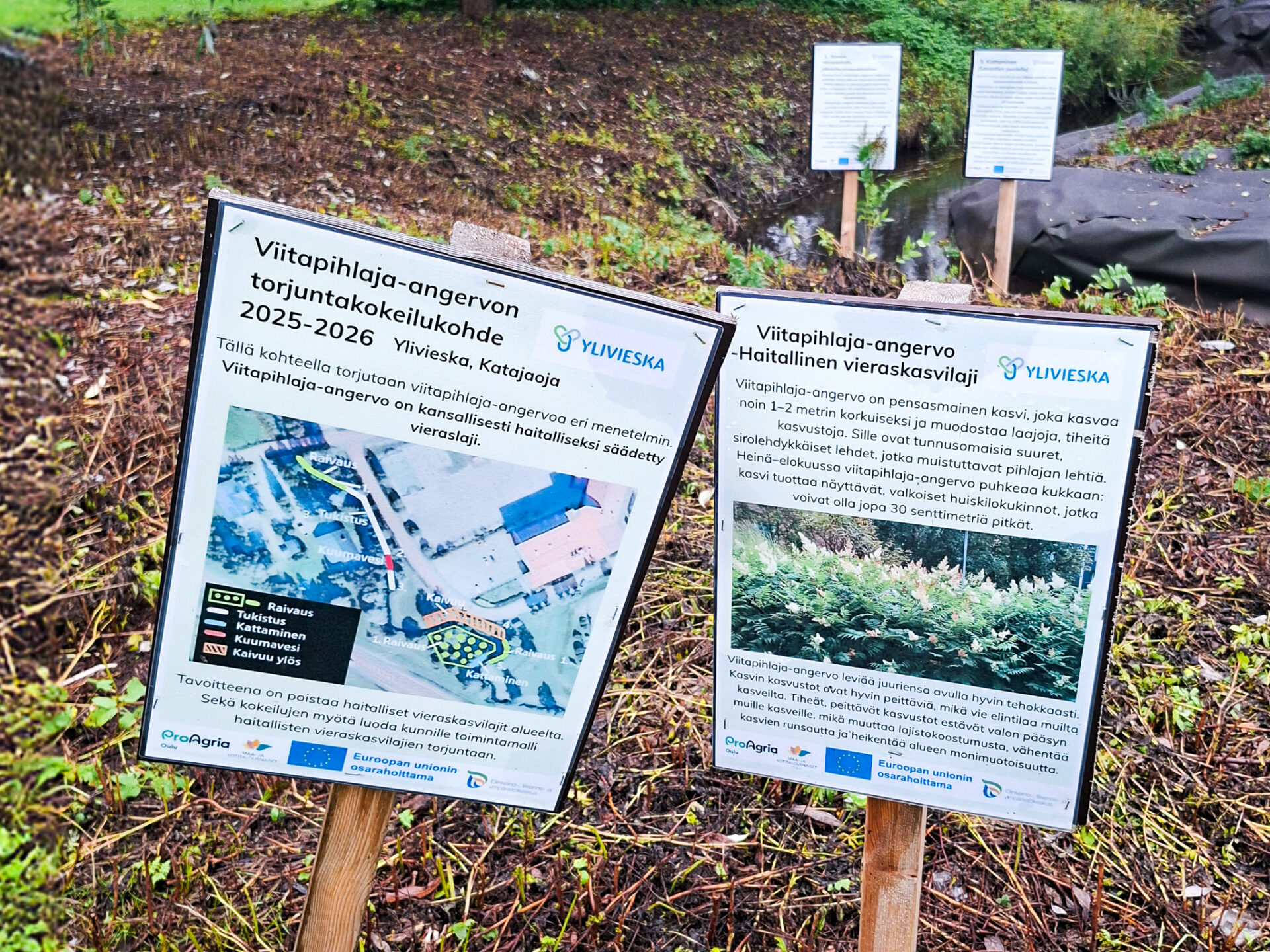 In July, a trial for controlling false spirea began in Ylivieska using different methods: clearing, smothering, covering, hot water (Eco Weedkiller), and excavator removal with roots.
Controlled Management Is an Investment in the Future
Invasive species spread rapidly, but they can be controlled with the right methods. By incorporating Eco Weedkiller hot water treatment into municipal maintenance, municipalities can stop the spread early, reduce costs, and protect both the environment and infrastructure.
Start controlling invasive species with hot water by choosing the package that suits you:
-
Training/orientation for invasive species control with hot water
-
Rental unit + training
-
Invasive species control as a service
-
Purchase a unit + training
Contact
Kimmo Kärki
[email protected]
+358 50 490 0085